IoT vs Embedded Systems: What’s the Difference and Which Course Should You Choose?

If you’ve spent even ten minutes browsing tech courses in Coimbatore, you’ve likely run into this exact confusion: IoT and embedded systems get mentioned in the same pitch so often that they start to sound like the same field. They aren’t. We see this mix-up almost every time, when students walk into our office having already decided on one course without fully understanding what separates it from the other. At Codei5 Academy, it’s probably the most common question we get from students, so let’s actually break it down.
What Is IoT, Really?
IoT means connecting a physical device to the internet so it can send or receive data.
A smart bulb you control from your phone. A fitness band tracking your steps at 2 a.m. A sensor buried in farmland that texts a farmer when the soil’s gone dry. All IoT devices. Each one has a small chip inside doing the thinking, but the real work happens when that chip connects to a cloud server, an app, or another device somewhere else entirely.
Here’s an example for an IOT device. A soil moisture sensor checks the ground every few minutes. If it gets too dry, it can trigger a water pump on its own and ping the farmer’s phone with an alert. Take away the internet connection, and none of that happens — the sensor becomes a little box sitting in the dirt. That connection piece is really the whole story with IoT.
Naturally, learning IoT means spending real time on cloud platforms, protocols like MQTT, app integration, dashboards. You’re building something that can talk back.
What Is an Embedded System?
An embedded system is a small computer built into a device to do exactly one job, forever, without asking for permission from the internet.
Your washing machine’s control panel. The anti-lock braking system in a car. The chip is running a microwave oven. None of these needs Wi-Fi. None of them is trying to “connect” to anything. Their entire purpose is to run one program correctly, over and over, repeatedly— and honestly, that reliability is harder to pull off than it sounds.
This is where things get properly technical. You’re working with microcontrollers, sensors, circuits, and low-level C code that has to squeeze into a chip with almost no memory to spare. A washing machine doesn’t need what the weather’s doing outside. It just needs to spin when you press the button, every single time.
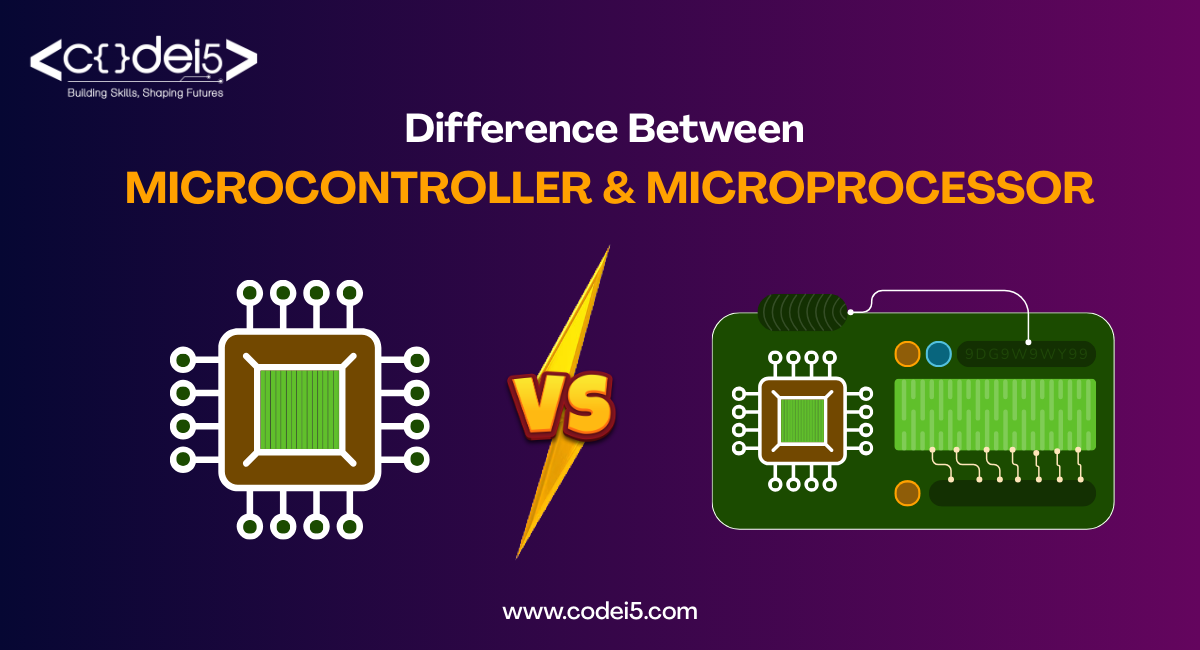
If you want the hardware fundamentals explained properly before going any further, we wrote about the difference between a microcontroller and a microprocessor — worth a read before you pick a course.
IoT vs Embedded Systems: The Core Difference
Embedded systems build the brain of a single device. IoT connects that brain to a network so it can connect to other devices and sensors.
Every IoT device has embedded systems installed inside it somewhere. But plenty of embedded systems never touch IoT at all. A calculator has an embedded chip and will never need internet access in its entire life. A smart thermostat also has an embedded chip, except its whole value comes from being connected — to your phone, to weather data, to your daily schedule.
Embedded systems are the foundation. IoT is one layer you can build on top of that foundation, if the device needs it.
A Few Common Myths, Cleared Up
A lot of students think IoT is just a fancier, newer version of embedded systems — like an upgrade. It isn’t. its own direction that happens to share a starting point with embedded work. Knowing IoT doesn’t automatically make you good at debugging a circuit board, and knowing embedded systems doesn’t teach you cloud architecture or app development on its own.
Second myth, and this one comes up constantly: people think embedded systems are on their way out because everyone’s switching to smart, connected devices now. Not true, not even close. Cars, medical devices, factory machines, and half the appliances in your kitchen run on embedded systems that never see the internet. Companies will need engineers who can build and fix these for a long time yet.
Skills You’ll Learn in Each Course
Our embedded system course in Coimbatore goes deeper into circuit design, microcontroller programming, sensor interfacing, and the kind of close hardware debugging a faulty multimeter trying to figure out why a signal isn’t reaching the right pin. You come out writing tight, efficient code for chips with barely any memory to spare.
Our IoT course in Coimbatore shares some of that hardware groundwork but pushes much further into wireless communication, cloud dashboards, mobile app connectivity, and real-time monitoring. You’ll still get your hands on training on ESP32 boards and sensors — but a bigger part of the course goes toward how that hardware works with everything around it.
If circuits and electronics genuinely excite you more than apps and dashboards, go with the advanced embedded systems course. If the idea of a smart, connected product you can control from anywhere sounds more interesting for you, IoT fits better.
Career Paths and Salary After Each Course
Neither field is shrinking, so relax on that front. Embedded systems engineers get picked up by automotive companies, industrial automation firms, and consumer electronics manufacturers — places that need someone who can debug a board without losing their patience upfront.
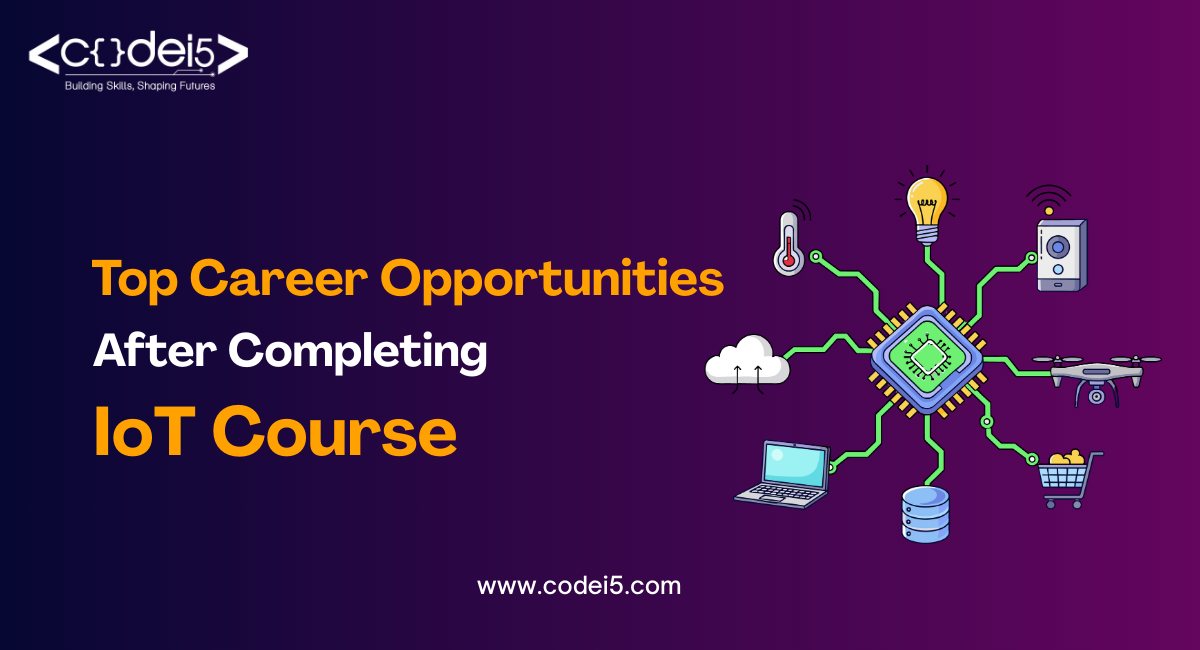
IoT professionals tend to land in a slightly wider industry: IoT developer, solutions architect, product engineer for smart devices. Because IoT sits somewhere between hardware, software, and the cloud, there’s a longer list of job titles to aim for. We covered this in more depth in our post on career opportunities after completing an IoT course, including what a fresher’s first year usually looks like.
Salary in both fields comes down to your project work more than your certificate. A fresher who’s actually built two or three working projects during training gets shortlisted faster than someone who only gained knowledge through theory — interviewers almost always ask about the projects on your resume before anything else. If you want a longer-term plan, our roadmap to becoming an IoT developer breaks the skills down month by month, with realistic timelines attached.
Which One Should You Choose?
Answer yourself a few honest questions.
Do circuits, soldering, and low-level code hold your attention longer than apps and dashboards do? Embedded systems is your answer. Does the idea of a product you can control from your phone, from anywhere, sound genuinely exciting? Go with IoT.
Still not sure? That’s fine — most students start out unsure. A common and sensible path is to begin with embedded systems, build a solid hardware foundation, and move into IoT once circuits and microcontrollers feel comfortable. It makes the learning curve smoother since IoT concepts sit naturally on top of embedded knowledge anyway.
There’s no wrong pick here, honestly. Both roads lead somewhere solid, in a field that’s only going to keep expanding as more everyday devices get smarter.
One more thing worth saying — choose based on genuine interest, not on what you’ve seen trending online or which title sounds more impressive to mention socially. Students switch tracks a few months going forward simply because the syllabus didn’t match what they actually enjoyed working on. Take some time with both course descriptions before deciding. If possible, visit the campus, book a demo class, and share knowledge with someone who has already completed the course. That conversation alone can save you time upfront.
Conclusion
IoT and embedded systems are related, sure, but they’re not the same journey. Each one demands its own skill set, its own way of thinking about a device, and its own career path. Getting this clear before you enrol saves you months of time
If you’d like personalised guidance choosing between the two, get in touch with our team. At Codei5 Academy, we’ll walk you through what a structured IoT or embedded systems course actually looks like and help you decide if it’s the right next step for you.
Frequently Asked Questions
1. What’s the difference between IoT and embedded systems?
Embedded systems run a single device’s brain, while IoT connects that brain to a network.
2. Does Codei5 Academy offer both IoT and Embedded Systems courses in Coimbatore?
Yes — Codei5 Academy offers both courses in Coimbatore, with hands-on projects and placement support.
3. Can I work in IoT without learning embedded systems first?
You can, though a basic grip on embedded systems makes IoT hardware concepts click much faster.
4. Which pays more, an IoT developer or an embedded systems engineer?
Both pay well; the actual salary leans more on project experience and company than the field itself.
5. Do Codei5 Academy’s IoT and embedded courses include live projects and placement support?
Yes, every course at Codei5 Academy comes with live projects, mentorship, and 100% job placement assistance.
6. Is embedded systems programming harder than IoT development?
Embedded work demands more hardware precision, while IoT demands broader knowledge across hardware, software, and cloud tools.
7. What programming languages are used in IoT and embedded systems?
C and embedded C dominate embedded work, while IoT also pulls in Python, JavaScript, and cloud scripting.
8. Can a mechanical or electronics engineering graduate join an IoT course?
Yes. Plenty of IoT students come from electronics, mechanical, or even non-technical backgrounds with the right training.
9. Where is Codei5 Academy located, and can I attend classes online too?
Codei5 Academy is based in Ganapathy, Coimbatore, offering both classroom and online training for students.
10. How long does it typically take to become job-ready in either field?
Most students get job-ready in three to six months, depending on prior knowledge and consistent practice.