How a Full-Stack Developer Course Helps Non-IT Students Enter the IT Industry?
Students with non-technical backgrounds may find it difficult to break into the IT industry. Many people feel that without a computer science degree, pursuing a job in IT is impossible.
However, the reality now is quite different. Non-IT students can successfully transition into technology positions with the correct direction, structured learning, and practical experience. A full-stack developer course for non-IT students can help make this job transition easier and more attainable.
This blog shows how a full-stack developer course may help non-IT students learn skills, confidence, and successfully launch an IT career, even if they have no prior coding experience.
Why Non-IT Students Struggle to Enter the IT Industry?
Non-IT students face numerous hurdles while trying to enter the IT profession, particularly at the beginning of their careers.
- Many students have no prior experience with programming or software concepts, which leads to worry and self-doubt.
- Beginners with non-IT backgrounds may find technical concepts and coding languages complicated and daunting.
- Students are sometimes confused about which IT course to take because there are so many possibilities available without clear advice.
- Academic degrees in non-technical subjects frequently do not meet modern industrial requirements, resulting in a skills gap.
- The lack of mentorship and real-world experience makes it difficult to understand how IT careers truly work.
These issues might be discouraging for students, but they can be efficiently addressed with structured full-stack developer training.
What Is a Full-Stack Developer Course?
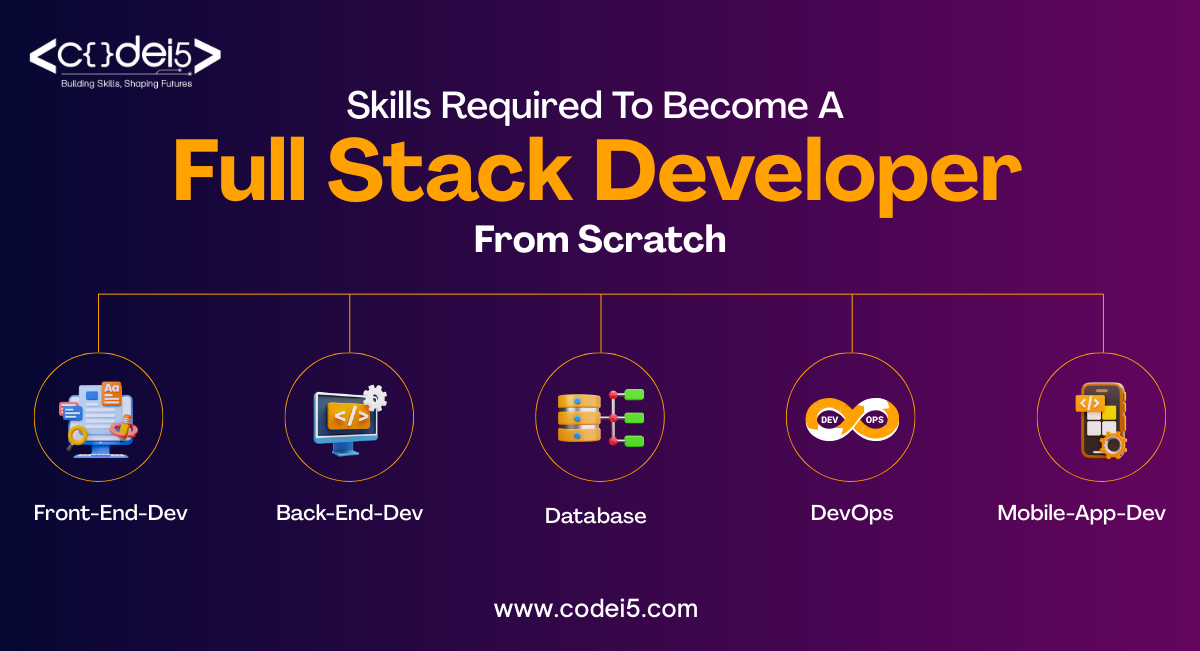
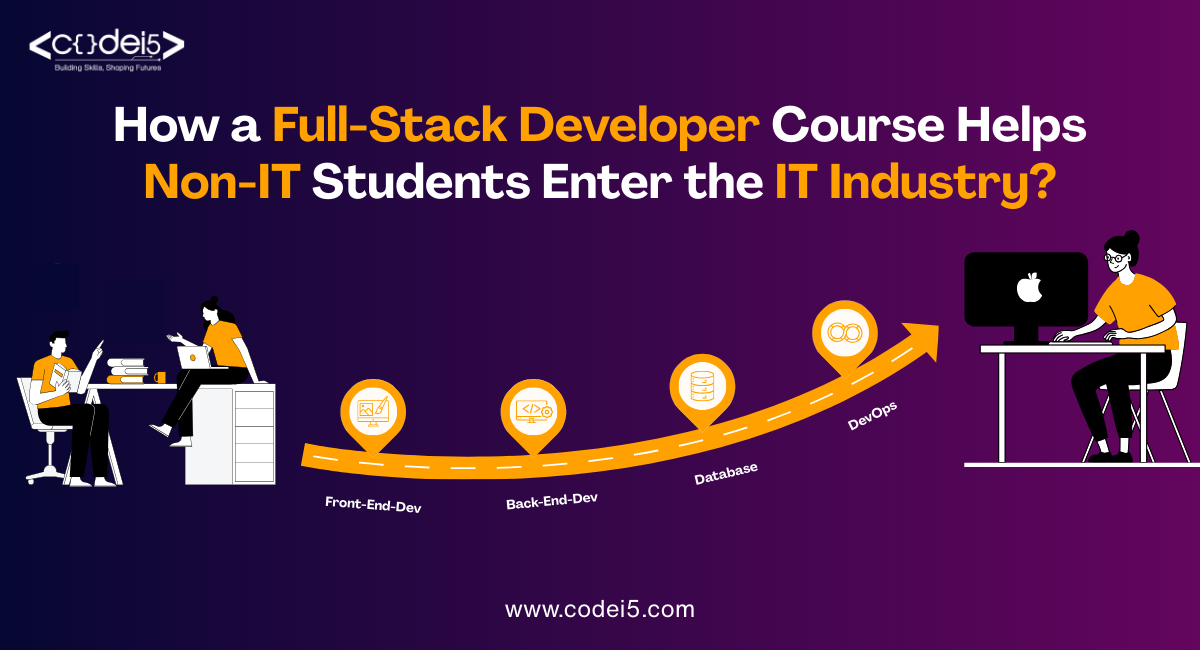
A full-stack developer course teaches students how to create complete web applications from the start. It focuses on both the frontend and backend aspects of development, preparing students to manage a full project independently.
In simple words, a full-stack developer course includes:
- Frontend development teaches students how to build and structure websites with technologies such as HTML, CSS, and JavaScript.
- Backend development involves creating server-side logic that controls how applications operate behind the scenes.
- Database management involves teaching students how to safely store, retrieve, and manage data.
- Project-based learning allows students to apply their knowledge in real-world situations.
A full-stack developer course for non-IT students is meant to start with the basics, allowing newcomers to learn without feeling overwhelmed.
How a Full-Stack Developer Course Helps Non-IT Students?
A full-stack developer course offers a step-by-step learning approach that allows non-IT students to achieve confidence and clarity.
1. Learning Begins From the Basics:
The course begins with basic concepts to make sure that students understand programming logic before progressing to higher topics.
2. Clear and Structured Learning Path:
Instead of random tutorials, students follow a well-planned curriculum that takes them from beginning to job-ready abilities in a logical progression.
3. Strong Focus on Practical Learning:
Hands-on training and real-world projects help students understand how theoretical concepts are applied in real-world settings, building confidence and problem-solving skills.
4. Industry- Oriented Skill Development:
The course focuses on tools and technologies that are currently in demand, guaranteeing that students develop skills applicable to today’s IT employment market.
5. Continuous Support and Guidance:
Mentors provide constant feedback, explanation of doubts, and support, which helps non-IT students learn more effectively.
This structured learning environment allows students to easily transfer into IT professions.
Skills Non-IT Students Gain From a Full-Stack Developer Course:
A professional full-stack developer training program teaches non-IT students the technical and logical abilities needed for IT professions.
- Students learn the principles of programming as well as logical reasoning, both of which are necessary for software development.
- Frontend abilities allow students to create responsive and user-friendly interfaces.
- Backend knowledge allows students to control application logic and server operations.
- Database abilities allow students to manage data efficiently and securely.
- Real-time projects improve students confidence and prepare them for real-world difficulties.
These abilities work together to provide students with a solid basis for a long-term full-stack developer career.
Full-Stack Developer Certification and Its Importance:
A recognized full-stack developer certification is important for verifying a student’s skills, especially for those with non-IT backgrounds.
- Certification shows that the student has completed structured training and practical experience.
- It increases credibility during job interviews and enhances the chances of being shortlisted.
- Employers report that certified candidates appear more confident and industry-ready.
- Certification also indicates a strong dedication to study and professional development.
Non-IT students benefit from certification since it lends credibility to their professional portfolio.
Career Opportunities After a Full-Stack Developer Course:
Non-IT students who complete a full-stack developer course can apply for a variety of entry-level IT positions.
- Junior web developer jobs focus on website design and maintenance.
- Positions for software developers who work on application development and testing.
- Individual abilities and interests dictate whether they work on the frontend or backend.
- Full-stack developer positions with startups and growing IT companies.
Full-stack development provides flexibility, stability, and ongoing advancement for non-IT professionals wanting to advance their careers in IT. If you want a clear step-by-step roadmap after completing your course, you can also read our detailed guide on “How to Start Your Career as a Full Stack Developer in 2025?“, which explains job roles, skill requirements, and career growth in detail.
Why Choose Codei5 Academy for Full-Stack Developer Training?
Choosing the correct training institute is important to job success. Codei5 Academy aims to help non-IT students become competent IT professionals.
- The training method is user-friendly and simple to understand.
- The courses are designed to meet current industry standards and expectations.
- Students engage in real-time projects to develop their practical expertise.
- Experienced mentors offer ongoing guidance and career help.
- Interview preparation and career guidance help students enter the job market with confidence.
Students looking for a full-stack developer course in Coimbatore can greatly benefit from Codei5 Academy’s structured and helpful learning environment.
Is a Full-Stack Developer Course the Right Choice for You?
A full-stack developer training is perfect if you:
- Want to work in IT but have no prior experience with IT or computers.
- Are eager to learn fresh skills step by step.
- Prefer actual, hands-on learning over theory.
- want to advance your career in technology for the long term.
- With the correct effort and preparation, non-IT students can confidently excel in IT.
Conclusion:
The IT business now accepts qualified workers with various educational backgrounds. A full-stack developer course for non-IT students provides an excellent foundation for learning programming, gaining hands-on experience, and developing confidence.
Codei5 Academy supports this shift by providing industry-relevant training and ongoing support. Enrolling in a full-stack developer course in Coimbatore might be the initial step towards a secure and rewarding profession.