Much of the modern world is powered by embedded technology, which includes smart homes, medical devices, electric vehicles, and industrial automation. With the sudden rise in automation, AI-enabled hardware, and interconnected systems, the demand for talented embedded engineers continues to increase.
To succeed in this growing sector, students must focus on real, industry-ready skills rather than just theory. Choosing the appropriate embedded systems course with hands-on training is important.
In this blog, we’ll look at the top embedded systems skills to study in 2026 and how institutes like Codei5 Academy can help you gain real-world experience.
1. Strong Foundation in C & C++ Programming for Embedded Systems
A solid programming basis is required for anyone entering the embedded domain.
Key learning areas include:
- Understanding C programming ideas for embedded systems.
- Handling pointers, memory allocation, and bit manipulation.
- Writing efficient, hardware-oriented code.
- Learning C++ basics for modular and scalable firmware.
Most students begin their journey with a structured embedded systems course that emphasises real-time coding techniques. Codei5 academy students acquire practical experience through guided lab sessions.
Many students prefer to join an Embedded C Programming Course in Coimbatore to get job-ready programming skills.
2. Microcontrollers & Processor Architecture Knowledge:
Embedded engineers must have a good understanding of how hardware works internally.
Important concepts to master:
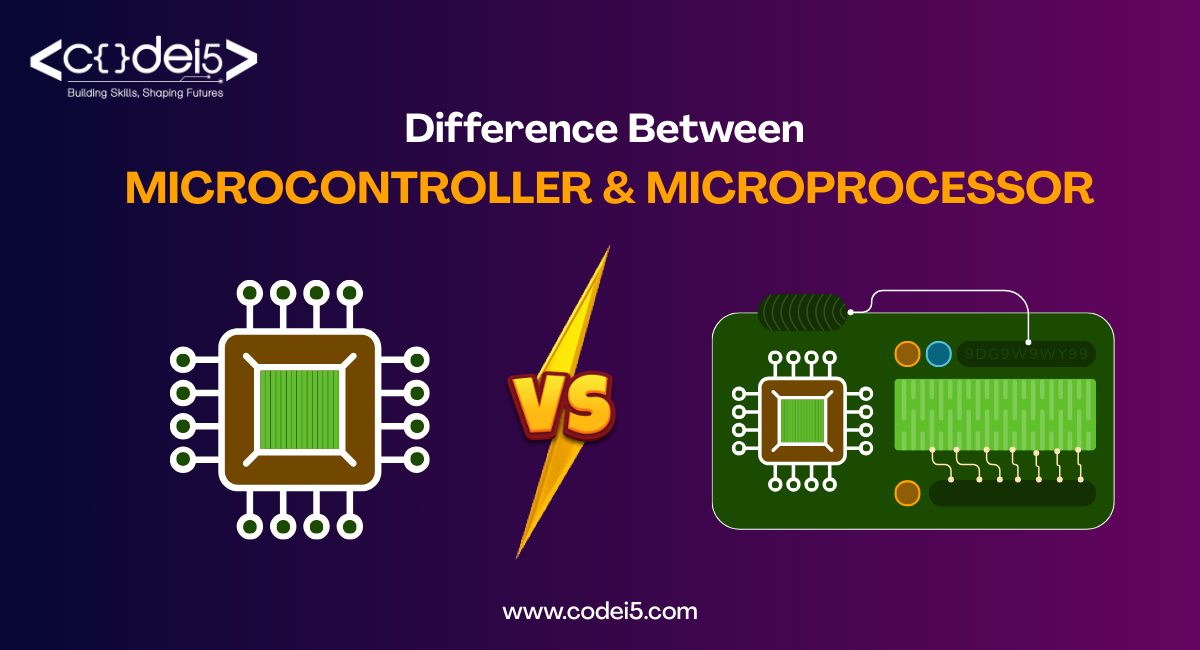
- Basics of microcontroller architecture (ARM, PIC, and AVR)
- GPIO configuration and peripheral control.
- Interrupt handling and timer activities.
- Reading and interpreting microcontroller datasheets.
A hands-on embedded systems training program guarantees that students can work confidently with actual development boards. Codei5 Academy focuses on practical microcontroller training to improve key embedded systems career skills.
3. RTOS (Real-Time Operating Systems) Fundamentals:
RTOS knowledge is becoming increasingly important in current embedded applications.
Why RTOS matters:
- Allows multitasking in embedded systems.
- Helps manage time-critical operations.
- Improves system reliability and efficiency.
- Frequently used in automotive and industrial applications.
Students who take an industry-focused embedded systems course learn RTOS and are prepared for advanced job opportunities. Codei5 Academy’s training uses real-world scenarios to illustrate RTOS fundamentals.
4. Embedded Linux & Device Driver Basics:
Embedded Linux significantly improves an embedded engineer’s skill set.
Core areas to focus on:
- Understanding the Linux Boot Process
- Basic file system and kernel concepts.
- Introduction to Device Drivers
- Working with Linux-based embedded boards.
Many experts pick advanced embedded systems training to supplement their microcontroller knowledge with Linux skills.
5. Hardware Interfacing & Communication Protocols:
Hardware interaction is an everyday occurrence for embedded engineers.
Common protocols to learn:
- UART for serial communication.
- SPI and I2C for sensor interface
- CAN for Automotive Applications
- USB basics for peripheral communication.
These are the important Embedded systems skills for jobs, as companies need engineers to interface and debug hardware independently.
6. IOT & Connectivity skills for embedded engineers:
Connectivity has emerged as an essential competence in today’s embedded positions.
Key IoT-related skills include:
- Working with Wi-Fi and Bluetooth modules.
- Understanding IoT communication concepts.
- Basics of Cloud Connectivity
- Real-world IoT application development.
This combination improves embedded systems professionals’ abilities and expands chances for smart device development.
As embedded devices get smarter, AI integration plays an increasingly important role in modern applications. To learn how artificial intelligence is shaping this industry, check out our blog on “The Future of AI in Embedded Systems: Course Insights“.
7. Debugging, Testing & Problem-Solving Skills
Professional embedded engineers distinguish themselves through their ability to debug.
Essential debugging abilities:
- Identifying hardware and software defects
- Using debuggers and test tools
- Analyse system logs and outputs.
- Optimizing performance and stability.
Students participating in an Embedded C Programming Course in Coimbatore often acquire strong debugging skills through hands-on lab experience at Codei5 Academy.
8. Industry-Orientated Projects & Practical Exposure:
Projects play an important part in professional preparedness.
Benefits of project-based learning:
- Practical use of embedded concepts
- Experience with real-world issue solving
- Improved understanding of industry standards
- Improved placement preparedness.
Choosing the best embedded systems training institute in Coimbatore guarantees that learners receive valuable project experience. As part of its embedded systems training program, Codei5 Academy places a strong emphasis on industry-relevant projects.
Conclusion:
The embedded industry is changing rapidly, and remaining current with the necessary skills is critical to long-term success. Mastering these abilities, which range from C programming and microcontrollers to RTOS, Linux, IoT, and debugging, will provide you with intriguing opportunities in 2026.
If you want to develop a future-proof profession, investing in structured embedded systems training now can help you stay competitive in tomorrow’s technology-driven market.